Steroid Science Decoding the Chemistry Behind Steroid Compounds

Steroid Science

Decoding the Chemistry Behind Steroid Compounds

Latest Articles

Cortisol's Double Life: When a Life-Saving Hormone Turns Against the Body It Was Built to Protect
Endocrinology

Cortisol's Double Life: When a Life-Saving Hormone Turns Against the Body It Was Built to Protect

Cortisol evolved as a precision instrument for short-term survival, mobilizing energy and suppressing inflammation in moments of acute crisis. But modern chronic stressors expose a fundamental design flaw: the same molecular pathways that preserve life in the short term become engines of metabolic and immunological destruction when activated indefinitely. This article examines the biochemical mechanisms behind cortisol's transformation from protector to pathogen.

Rehabilitating the Molecule: The Clinical Science Reclaiming Anabolic Steroids as Legitimate Therapeutic Agents
Molecular Pharmacology

Rehabilitating the Molecule: The Clinical Science Reclaiming Anabolic Steroids as Legitimate Therapeutic Agents

Decades of association with athletic doping have obscured a substantial and growing body of clinical evidence supporting the therapeutic use of anabolic androgenic steroids in oncology, burn medicine, hormone replacement, and age-related muscle loss. This article examines the pharmacological science behind specific approved and investigational compounds, the regulatory landscape governing their use, and the institutional stigma that continues to complicate their deployment in precision medicine.

Receptor Saturation and the Ceiling Effect: Why More Steroid Doesn't Always Mean More Response
Molecular Pharmacology

Receptor Saturation and the Ceiling Effect: Why More Steroid Doesn't Always Mean More Response

The assumption that increasing a steroid dose will proportionally amplify its biological effect is one of the most persistent misconceptions in both clinical and lay understanding of steroid pharmacology. Dose-response curves reveal a far more nuanced reality—one governed by receptor saturation, threshold kinetics, and diminishing returns. Understanding this non-linearity is essential for both safe clinical practice and accurate interpretation of steroid research.

From Hours to Weeks: The Biochemical Clock Governing Steroid Onset of Action
Endocrinology

From Hours to Weeks: The Biochemical Clock Governing Steroid Onset of Action

Not all steroids work on the same schedule. Some compounds trigger measurable physiological changes within hours; others require weeks of continuous exposure before their clinical effects become apparent. The explanation for this striking variation lies in a layered set of biochemical mechanisms—including lipophilicity, receptor expression dynamics, and the inherent delays built into gene transcription and tissue remodeling—that together determine when, and how quickly, a steroid compound regist

The Invisible Gatekeepers: How Carrier Proteins Control Steroid Availability in the Bloodstream
Endocrinology

The Invisible Gatekeepers: How Carrier Proteins Control Steroid Availability in the Bloodstream

The concentration of a steroid hormone in the blood tells only part of the story — what matters at the cellular level is how much of that steroid is actually free to act. Sex hormone-binding globulin and albumin serve as molecular gatekeepers that determine whether a steroid reaches its target tissue or remains pharmacologically inert while in transit. Variations in these carrier proteins across individuals and populations quietly shape hormone physiology, drug efficacy, and clinical interpretat

Molecular Pharmacology

Molecular Brake Pads: How Glucocorticoids Shut Down the Inflammatory Cascade

Glucocorticoids are among the most prescribed anti-inflammatory agents in modern medicine, yet the molecular choreography behind their immune-suppressing effects remains underappreciated outside specialist circles. By binding to intracellular receptors and reprogramming gene transcription, these steroid compounds execute a precise and far-reaching dampening of the body's inflammatory machinery. Understanding this mechanism illuminates both the therapeutic power and the unavoidable biological tra

The Androgen-to-Estrogen Conversion: Aromatase and the Hidden Feedback Architecture of Steroid Action
Endocrinology

The Androgen-to-Estrogen Conversion: Aromatase and the Hidden Feedback Architecture of Steroid Action

Aromatase, the enzyme responsible for converting androgens into estrogens, operates silently across multiple tissue types and exerts influence that extends far beyond reproductive biology. Its activity creates a parallel biochemical pathway that modifies the net effect of androgen exposure, reshapes hypothalamic-pituitary signaling, and generates clinical consequences that are frequently misattributed or overlooked. This article examines aromatization as a structural feature of steroid biochemis

Molecular Pharmacology

One Enzyme, Opposite Outcomes: How the Liver Transforms Steroids Into Something Entirely Different

The liver's cytochrome P450 enzyme network does not simply degrade steroids—it actively reshapes them, sometimes amplifying their potency and sometimes rendering them inert. Understanding how genetic variation in enzymes like CYP3A4 produces divergent physiological responses to identical doses is one of the most consequential puzzles in steroid pharmacology. This article unpacks the biochemical logic behind first-pass metabolism and its profound implications for personalized medicine.

From Diosgenin to the Dispensary: The Century-Long Chemical Journey That Built Modern Steroid Medicine
Endocrinology

From Diosgenin to the Dispensary: The Century-Long Chemical Journey That Built Modern Steroid Medicine

The synthetic steroids that fill today's pharmacy shelves did not emerge from thin air—they were painstakingly derived from plant sterols and animal cholesterol through decades of chemical ingenuity. This article traces the landmark transformations and pioneering chemists who converted humble natural precursors into the corticosteroids, contraceptives, and anabolic agents that have reshaped modern medicine.

Shape as Destiny: How Steroid Molecular Architecture Dictates Receptor Binding and Physiological Outcome
Molecular Pharmacology

Shape as Destiny: How Steroid Molecular Architecture Dictates Receptor Binding and Physiological Outcome

The biological potency of any steroid compound is inseparable from its three-dimensional chemical architecture. This article examines the structural determinants of receptor binding affinity, drawing on crystallographic data and computational models to explain how atomic-level variations translate into profoundly different physiological signals across tissues.

The Steroid Hormones Already Inside You: A Biochemical Portrait of Cortisol and Cortisone
Endocrinology

The Steroid Hormones Already Inside You: A Biochemical Portrait of Cortisol and Cortisone

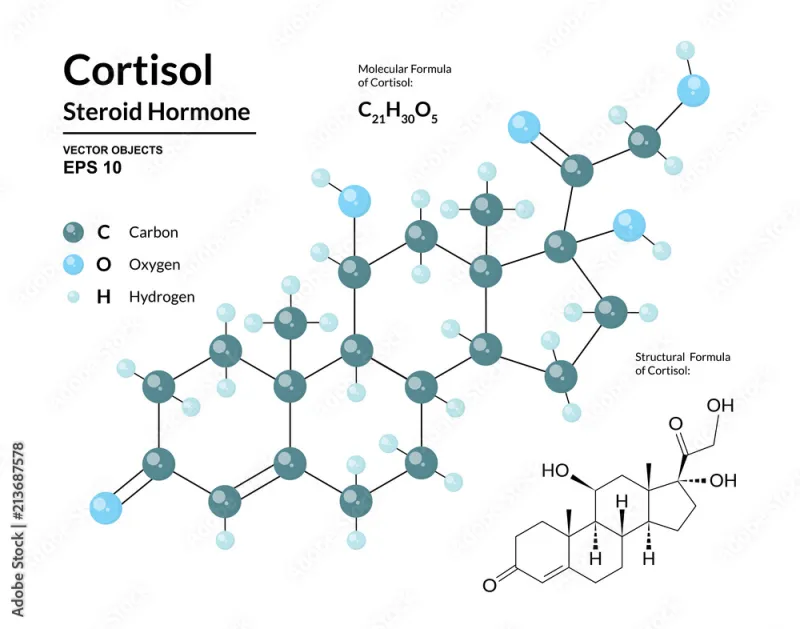
Long before synthetic steroids entered the clinical conversation, the human body was already manufacturing its own remarkably sophisticated steroid compounds. Cortisol and cortisone represent the cornerstone of adrenal steroid biology, orchestrating everything from your morning alertness to your immune system's inflammatory response. Understanding their biochemistry is not merely academic — it is foundational to health literacy in the modern era.

Selectivity Over Potency: How the Anabolic-Androgenic Ratio Defines Steroid Behavior at the Receptor Level
Molecular Pharmacology

Selectivity Over Potency: How the Anabolic-Androgenic Ratio Defines Steroid Behavior at the Receptor Level

The anabolic-androgenic ratio is one of the most cited — and most frequently misunderstood — concepts in steroid pharmacology. Far from a simple numerical ranking, this ratio encodes critical information about how a steroid compound interacts with specific receptor populations at the molecular level. This technical analysis unpacks the structural chemistry and receptor biology that determine whether a steroid compound primarily builds tissue, drives androgen-dependent signaling, or modulates inf