Reading the Urine Like a Fingerprint: The Analytical Chemistry That Catches Doping
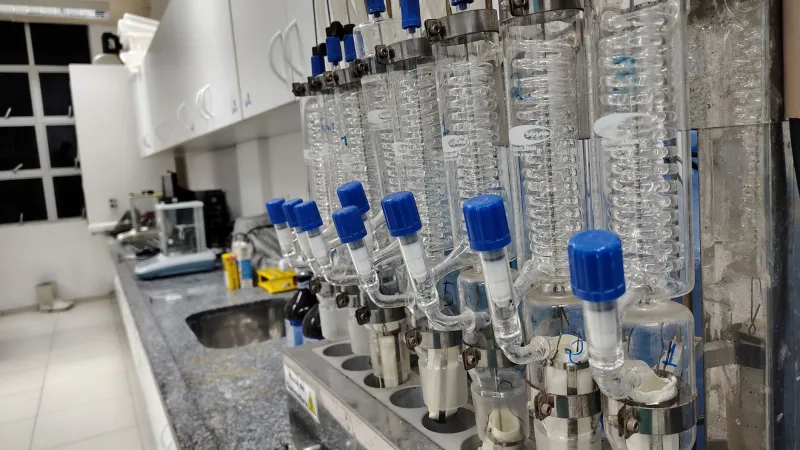
Every athlete subject to testing provides roughly 90 milliliters of urine. Within that sample, anti-doping laboratories must find evidence of compounds the body produces naturally, often administered at doses timed to evade detection windows. The science that makes this possible is a story of instrumentation, biochemistry, and creative reasoning.
Mass Spectrometry: The Workhorse
The core technology is gas chromatography coupled to mass spectrometry (GC-MS), and increasingly its more sensitive cousin, LC-MS/MS. In essence, the instrument separates individual molecules and then fragments them, producing a fragmentation pattern as distinctive as a fingerprint. Synthetic anabolic steroids and their metabolites — compounds like stanozolol, trenbolone, or oxandrolone — can be identified by matching these patterns against reference libraries at part-per-billion concentrations.
Sample preparation is half the battle. Steroids circulate as conjugates, chemically bound to glucuronic acid to aid excretion. Laboratories must first hydrolyze these conjugates enzymatically to free the steroid metabolites before analysis. This is precisely why some doping strategies target the conjugation process itself.
The BALCO Lesson: When the Reference Doesn't Exist
The BALCO scandal of the early 2000s exposed the fundamental limitation of library-based detection: tetrahydrogestrinone, or THG, was a designer compound with no commercial reference standard. It went undetected until an anonymous syringe was sent to a US lab, allowing scientists to characterize the molecule and retroactively develop a test. The lesson reshaped the field — detection now increasingly involves screening for unknown structural variants rather than only known compounds.
Carbon Isotope Ratio Testing: Distinguishing Endogenous From Exogenous
Testosterone presents a unique challenge: the body makes it, so its mere presence proves nothing. The solution lies in stable isotope analysis. Carbon in living organisms comes in two stable isotopes, carbon-12 and carbon-13, and their ratio varies with the biological source. Pharmaceutical testosterone, synthesized from plant sterols like those in soy and yam, carries a carbon isotope signature measurably different from testosterone produced by the human body. Carbon isotope ratio mass spectrometry (GC-C-IRMS) exploits this difference, comparing a suspect metabolite against a reference compound within the same sample to determine whether testosterone was produced endogenously or arrived from a bottle.
The Biological Passport: Watching the Baseline
The Athlete Biological Passport inverts the traditional model. Rather than searching for a forbidden substance, it tracks individual biomarker profiles — including the testosterone/epitestosterone ratio and markers of steroid profiles in urine — over years. Deviations from an athlete's own established baseline trigger investigation, even when no specific compound was ever identified. The passport makes the athlete's normal physiology the reference standard, closing many of the gaps that single-sample testing leaves open.
The Unfinished Arms Race
Some synthetic steroids remain exceptionally difficult to detect, particularly those rapidly metabolized to unknown products or those whose metabolites are never characterized by any laboratory. Detection science, however, keeps widening its net: longer retrospective screening, improved sensitivity in the low part-per-trillion range, and expanding marker panels. The contest between dopers and analysts is, at bottom, an applied chemistry problem — and the analysts have been steadily winning it.