After the Transformation: How Steroid Metabolites Rewrite the Pharmacological Story
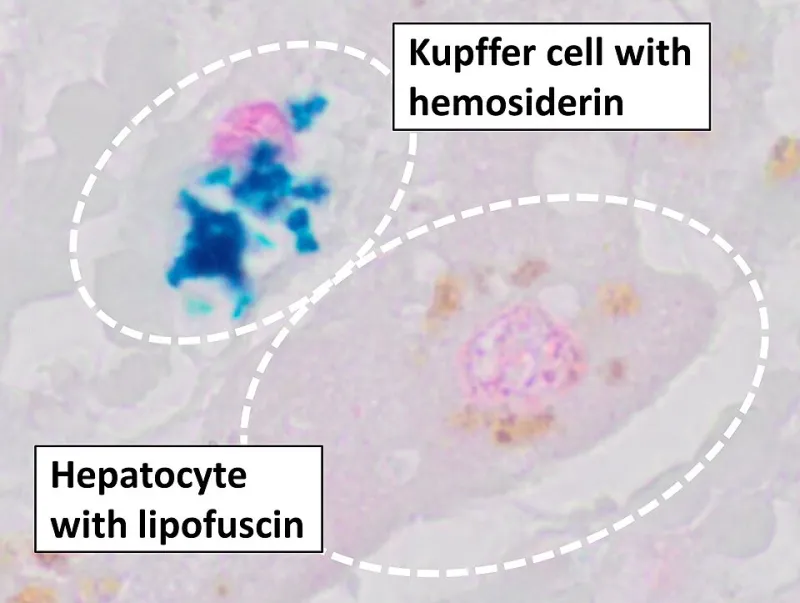
Photo: Mikael Häggström, M.D. Author info - Reusing images- Conflicts of interest: None Mikael Häggström, M.D.Consent note: Consent from the patient or patient's relatives is regarded as redundant, because of absence of identifiable features (List of HIP
When a clinician prescribes a steroid compound, the implicit assumption is that the administered molecule is the pharmacologically active agent. That assumption, while useful as a starting point, is frequently incomplete. Steroids are among the most metabolically dynamic compounds in human biochemistry, and the products of their enzymatic transformation—generated primarily in the liver, but also in peripheral tissues including the brain, adipose, and gut—often possess receptor affinities, tissue distributions, and biological activities entirely distinct from those of the parent structure.
This phenomenon, broadly termed active metabolite pharmacology, is not a pharmacological footnote. In several clinically significant cases, the metabolite is arguably more consequential than the compound from which it originates. Recognizing this reality requires moving beyond a linear model of drug administration and toward a more systems-oriented understanding of how steroids behave inside a living organism.
The Liver Is Not a Disposal System
A persistent misconception frames hepatic metabolism as a mechanism of steroid inactivation—a biochemical cleanup operation that renders active compounds inert for excretion. The liver does, in many instances, reduce steroid potency through conjugation and hydroxylation. But the same enzymatic machinery that deactivates some molecules activates or transforms others into pharmacologically distinct entities.
The cytochrome P450 enzyme family, particularly CYP3A4 and CYP2C subfamilies, drives much of this transformation, alongside 5-alpha and 5-beta reductases, 3-alpha and 3-beta hydroxysteroid dehydrogenases, and aromatase. Each enzyme introduces structural modifications—hydrogen additions, hydroxyl group placements, ring reductions—that alter the three-dimensional architecture of the steroid nucleus. Because receptor binding is acutely sensitive to molecular geometry, even modest structural changes can shift a compound from one receptor class to another, or amplify affinity at a receptor the parent compound barely engaged.
Testosterone provides one of the most instructive examples. Its 5-alpha reduction to dihydrotestosterone (DHT) produces a metabolite with substantially higher androgen receptor binding affinity than testosterone itself. DHT does not merely replicate testosterone's effects—it amplifies them in specific tissues, particularly the prostate, skin, and hair follicles. This tissue-selective amplification explains why testosterone therapy can produce androgenic effects in scalp and prostate tissue that seem disproportionate to circulating testosterone levels.
Neurosteroids: When Metabolites Cross Into a Different Domain Entirely
Perhaps nowhere is the metabolite story more surprising—and clinically consequential—than in the central nervous system. Certain steroid metabolites, particularly those derived from progesterone and testosterone, cross the blood-brain barrier with markedly different efficiency than their parent compounds, and once inside the CNS, they interact with receptor systems that bear no relationship to classical steroid hormone receptors.
Allopregnanolone, a 5-alpha reduced, 3-alpha hydroxylated metabolite of progesterone, is the paradigm case. Progesterone itself has modest activity at GABA-A receptors. Allopregnanolone, however, is a potent positive allosteric modulator of GABA-A—the same receptor class targeted by benzodiazepines and barbiturates. Its neuroinhibitory effects are substantial, producing anxiolytic, sedative, and anticonvulsant actions through a mechanism entirely outside the classical progesterone receptor pathway.
This is not merely an academic observation. The FDA-approved compound brexanolone, used for postpartum depression, is a synthetic form of allopregnanolone. Its therapeutic mechanism depends entirely on the metabolite's GABAergic activity—activity that progesterone itself cannot reliably produce at physiological concentrations. The clinical product, in other words, is the metabolite made pharmacologically accessible.
The implications extend to side effect prediction. Patients receiving progesterone supplementation who experience sedation, mood alterations, or atypical CNS effects may be responding not to progesterone per se, but to the allopregnanolone generated from it—a compound with a fundamentally different receptor profile operating in a tissue the original prescription was never intended to target.
Estrogen Metabolites and the Divergence of Estrogenic Activity
Estradiol's metabolic fate introduces another layer of complexity. Hepatic hydroxylation produces two primary catechol estrogens: 2-hydroxyestradiol and 16-alpha-hydroxyestradiol. These are not equivalent compounds. The 2-hydroxy pathway generates metabolites with relatively weak estrogenic activity that may actually exert anti-estrogenic effects in certain tissue contexts by competing for receptor binding without fully activating transcription. The 16-alpha pathway, by contrast, produces metabolites with sustained estrogenic potency, and some research has examined whether this pathway's products contribute disproportionately to estrogen-sensitive tissue proliferation.
The ratio of these competing metabolic pathways is influenced by genetic polymorphisms, dietary factors, and co-administered drugs—meaning two patients receiving identical estradiol doses may generate meaningfully different metabolite profiles, and thus experience divergent physiological responses. This metabolic individuality helps explain why hormone therapy outcomes vary considerably across patient populations in ways that serum estradiol measurements alone do not capture.
Glucocorticoid Metabolism and Tissue-Specific Activation
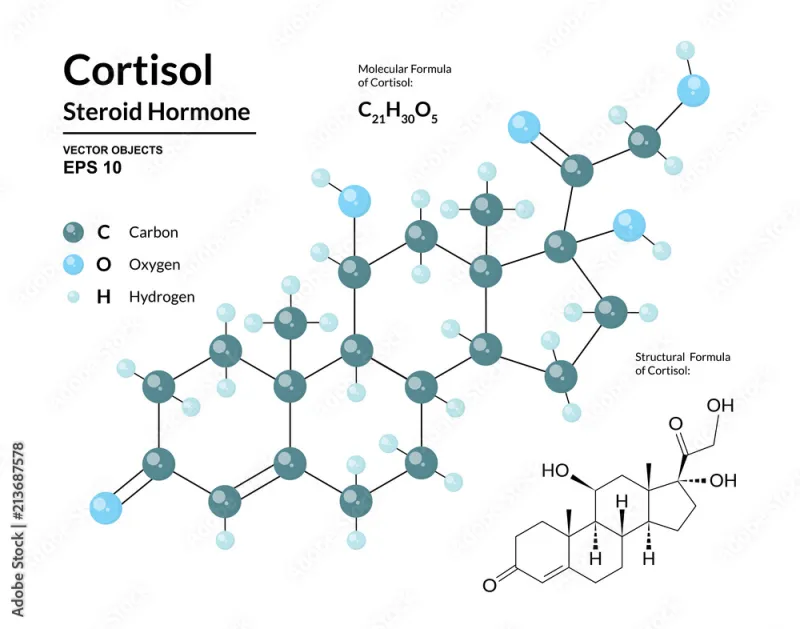
The cortisone-to-cortisol interconversion mediated by 11-beta-hydroxysteroid dehydrogenase (11β-HSD) is among the most studied examples of locally controlled steroid activation. Cortisone, pharmacologically inactive, is converted to the potent glucocorticoid cortisol within tissues expressing 11β-HSD1—including adipose tissue, liver, and the brain. This local amplification means that systemic cortisone levels underrepresent the glucocorticoid load experienced in specific tissue compartments.
This mechanism has direct clinical relevance in the context of obesity and metabolic syndrome. Elevated 11β-HSD1 activity in visceral adipose tissue generates locally elevated cortisol concentrations that drive metabolic dysfunction—insulin resistance, lipid accumulation, and inflammatory signaling—even when circulating cortisol appears within normal reference ranges. The metabolic consequences are real, but the conventional laboratory measurement misses them entirely because it measures the precursor rather than the active tissue-level product.
Rethinking Pharmacological Prediction
The cumulative picture that emerges from these case studies is one of substantial complexity. Predicting a steroid's full biological profile requires accounting not only for what the parent compound does, but for what its metabolites become, where those metabolites accumulate, and which receptor systems they engage. Metabolites can amplify, antagonize, redirect, or entirely supersede the actions of their precursors depending on the tissue, the enzymatic environment, and the individual's metabolic phenotype.
For researchers and clinicians working in steroid pharmacology, this argues for a more expansive analytical framework—one that treats the administered compound as a biochemical starting point rather than a finished pharmacological agent. Metabolite mapping, tissue-specific enzyme profiling, and receptor binding studies conducted on biotransformation products, not just parent structures, represent essential components of a complete pharmacological characterization.
The steroid molecule that enters the body and the constellation of molecules that subsequently act within it are not the same thing. Understanding the difference between these two realities is, increasingly, the frontier of steroid science.