Receptor Saturation and the Ceiling Effect: Why More Steroid Doesn't Always Mean More Response
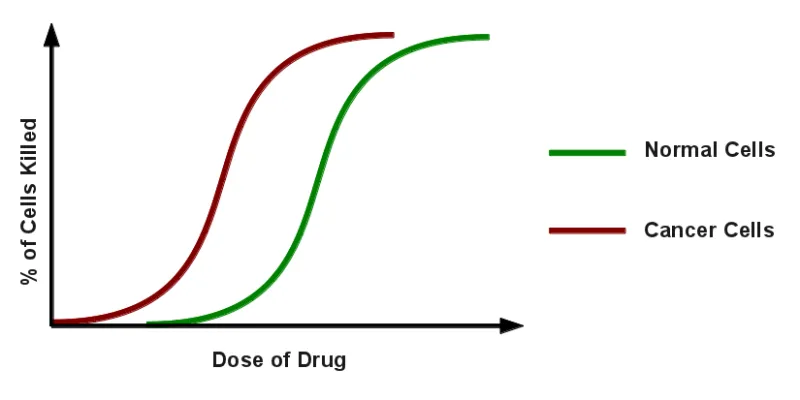
Photo: Simon Caulton, CC BY-SA 3.0, via Wikimedia Commons
Few assumptions in pharmacology are as intuitively appealing—or as scientifically misleading—as the idea that doubling a steroid dose will double its effect. This linear model of drug action feels logical. It maps onto everyday experiences with things like caffeine or alcohol. But steroid biochemistry does not operate on a straight line. The relationship between steroid concentration and physiological outcome is curved, bounded, and in many cases self-limiting in ways that have profound implications for medicine, research, and patient safety.
The Dose-Response Curve: A Primer on Non-Linearity
In pharmacology, the dose-response relationship is typically depicted as a sigmoidal, or S-shaped, curve. At very low concentrations, a steroid compound produces minimal measurable effect. As concentration rises, there is a steep phase of increasing response. Then, critically, the curve flattens—additional increases in dose yield progressively smaller gains until a plateau is reached. This plateau is not a failure of measurement. It is a fundamental property of receptor biology.
Steroid hormones exert the majority of their effects by binding to specific intracellular receptors—the glucocorticoid receptor (GR), the androgen receptor (AR), the estrogen receptor (ER), and others. Each cell contains a finite number of these receptor proteins. Once a sufficient concentration of steroid is present to occupy the available receptors, adding more steroid has nowhere productive to go. This is receptor saturation, and it is the primary molecular explanation for why dose-response relationships are never truly linear.
The EC50—the concentration required to produce 50 percent of the maximum effect—is a standard benchmark in pharmacological research. What is less commonly appreciated outside of specialist literature is that the distance between EC50 and Emax (maximum effect) is often smaller than practitioners assume. For many steroid-receptor interactions, near-maximal receptor occupancy can be achieved at surprisingly modest concentrations.
Threshold Effects and the Concept of a Minimum Effective Dose
Below the linear portion of the sigmoidal curve lies another phenomenon worth examining: the threshold effect. Not all biological responses to steroids are gradual. Some require a minimum concentration before any measurable effect occurs at all. This threshold reflects the biochemical reality that certain downstream signaling cascades must be sufficiently activated before gene transcription changes become meaningful at the cellular level.
Clinically, this has important implications. In the context of glucocorticoid therapy—used across a wide range of inflammatory and autoimmune conditions in the United States—physicians routinely face the question of whether a patient who is not responding adequately needs a higher dose or whether they have already reached or surpassed the effective ceiling for the targeted pathway. Research published in clinical endocrinology literature has repeatedly demonstrated that escalating prednisone doses beyond certain thresholds in conditions such as rheumatoid arthritis produces diminishing anti-inflammatory benefit while disproportionately increasing the risk of adverse metabolic effects, including adrenal suppression, hyperglycemia, and bone density loss.
This divergence—where therapeutic benefit plateaus but toxicity continues to rise—is a defining feature of steroid pharmacology that the linear model entirely fails to capture.
Receptor Downregulation: When the System Pushes Back
Beyond saturation, there is a second mechanism that further undermines linear dose assumptions: receptor downregulation. Prolonged or supraphysiological exposure to steroid compounds can trigger a reduction in the number of functional receptors expressed by target cells. This is the body's homeostatic response to persistent activation—a form of biochemical adaptation that effectively reduces sensitivity over time.
In the context of anabolic-androgenic steroids (AAS), this phenomenon has been documented in skeletal muscle androgen receptor studies. Chronic supraphysiological androgen exposure has been associated with paradoxical decreases in AR density in certain tissue compartments, partially offsetting the expected anabolic signal. The net result is that escalating doses may not only fail to produce proportional gains—they may actively diminish the efficiency of the signaling system they are intended to exploit.
Glucocorticoid receptor downregulation in immune cells is similarly well-documented and is one of the proposed mechanisms underlying glucocorticoid resistance in conditions such as severe asthma and inflammatory bowel disease.
Pharmacokinetics: How the Body Handles Dose Escalation
The non-linearity of steroid response is not purely a receptor-level phenomenon. Pharmacokinetic factors—absorption, distribution, metabolism, and elimination—introduce additional complexity. Many steroid compounds exhibit non-linear pharmacokinetics at higher doses. Hepatic metabolic enzymes can become saturated, altering the rate of clearance. Plasma protein binding capacity—primarily to sex hormone-binding globulin (SHBG) and corticosteroid-binding globulin (CBG)—is finite, meaning that at higher concentrations, the proportion of free, biologically active steroid increases non-proportionally.
This protein-binding dynamic means that a modest increase in total serum steroid concentration at high doses can translate into a disproportionately large increase in free hormone—potentially amplifying both desired and undesired effects in ways that simple total-dose calculations cannot predict.
Clinical Implications: Designing Smarter Dosing Strategies
The practical takeaway from dose-response science is not that higher doses are never warranted—it is that dose escalation decisions must be grounded in mechanistic reasoning rather than intuitive arithmetic. In contemporary US clinical practice, this principle underpins the shift toward strategies such as alternate-day glucocorticoid dosing, which exploits the differential recovery rates of therapeutic versus adverse-effect pathways, and toward targeted delivery systems designed to maximize local receptor occupancy while minimizing systemic exposure.
For researchers, the dose-response curve serves as a reminder that experimental designs relying solely on high-dose steroid protocols may not accurately model physiological or even low-dose therapeutic conditions. The biology at supraphysiological concentrations can differ qualitatively—not just quantitatively—from the biology at clinically relevant doses.
Conclusion
The sigmoidal dose-response curve is among the most important conceptual tools in steroid pharmacology, yet its implications are routinely underestimated. Receptor saturation establishes a biological ceiling on steroid efficacy. Threshold kinetics define a floor below which effects are negligible. And receptor downregulation means that the system itself adapts in ways that further complicate linear predictions. For clinicians, researchers, and anyone seeking to understand how steroid compounds actually work inside the human body, abandoning the more-is-more model is not merely a theoretical exercise—it is a prerequisite for interpreting the science accurately.