From Diosgenin to the Dispensary: The Century-Long Chemical Journey That Built Modern Steroid Medicine
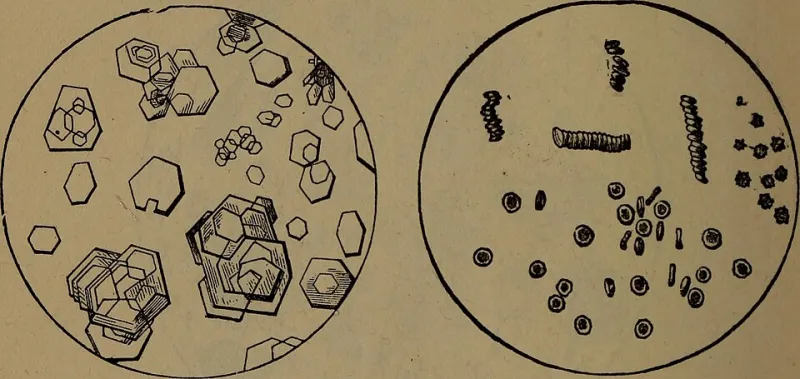
Photo: Internet Archive Book Images, No restrictions, via Wikimedia Commons
Walk into any American pharmacy and the steroid compounds lining its shelves represent one of the most consequential achievements in twentieth-century chemistry. Prednisone for a patient managing lupus. A metered-dose corticosteroid inhaler for someone with asthma. Oral contraceptives that changed reproductive medicine forever. These are not products of a single breakthrough moment; they are the cumulative result of a century of chemical transformation, beginning in the most unlikely of places—the roots of wild Mexican yams and the bile of slaughterhouse cattle.
The Problem of Scarcity: Why Natural Sources Were Never Enough
Before synthetic production became feasible, the only way to obtain biologically active steroid hormones was to extract them from animal tissues—a process that was laborious, expensive, and wholly impractical at therapeutic scale. Early researchers in the 1920s and 1930s extracted estrogens from thousands of liters of pregnant mare urine and isolated testosterone from hundreds of kilograms of bull testes. These heroic efforts confirmed the physiological importance of steroid hormones, but they offered no viable path to clinical medicine at population scale.
The structural elucidation of cholesterol, bile acids, and sex hormones—work for which multiple Nobel Prizes were awarded during the 1920s through 1940s—established that these compounds all shared the same four-ring steroidal nucleus. This insight was transformative. If the nucleus was shared, perhaps abundant natural sources containing related structures could serve as chemical feedstocks from which useful hormones could be synthesized. The race to identify practical starting materials had begun.
Russell Marker and the Yam That Changed Everything
No figure looms larger in the early history of steroid synthesis than Russell Marker, an unconventional American chemist who, in the early 1940s, became convinced that saponins found in certain plant species could be converted into progesterone. Working largely outside institutional support, Marker identified diosgenin—a steroidal sapogenin isolated from the root of Dioscorea species, the wild yam native to Mexico—as an ideal precursor.
Marker developed a four-step degradation sequence, now known as the Marker degradation, that cleaved the side chain of diosgenin to yield progesterone in commercially meaningful quantities. In a story that has become legendary in the history of chemistry, he traveled to Mexico, collected wild yam roots, and processed them in a rented laboratory to produce several kilograms of progesterone—an amount that dwarfed the entire world's previous supply. His subsequent founding of Syntex S.A. in Mexico City established the country as the center of global steroid production for decades.
The significance of the Marker degradation extended far beyond progesterone. By establishing diosgenin as an accessible steroidal starting material, Marker had effectively unlocked the entire steroid hormone family for synthetic elaboration. Every subsequent generation of steroid drugs traces its synthetic lineage, at least in part, to this foundational work.
Cortisone and the Anti-Inflammatory Revolution
The therapeutic potential of adrenal cortex hormones had been suspected since the 1930s, but it was the dramatic clinical demonstration by Philip Hench and Edward Kendall at the Mayo Clinic in 1948 and 1949 that ignited international urgency around cortisone synthesis. When cortisone produced remarkable remissions in patients with rheumatoid arthritis, demand immediately outpaced any conceivable supply from natural sources.
The initial synthesis of cortisone from bile acids required over thirty chemical steps and was prohibitively expensive. The challenge of introducing the critical C-11 oxygen function—absent from the readily available cholesterol-derived starting materials—proved to be the central bottleneck. A pivotal breakthrough came in 1952 when researchers at Upjohn Company discovered that the fungus Rhizopus arrhizus could hydroxylate progesterone at C-11 in a single microbiological step, collapsing what had been a multi-step chemical problem into an elegant bioconversion. This microbial transformation slashed the cost of cortisone production and demonstrated that biological catalysis could accomplish what purely chemical synthesis could not.
With affordable cortisone in hand, chemists immediately began modifying its structure to improve upon its therapeutic ratio. The addition of a C-1,2 double bond yielded prednisone and prednisolone—compounds with significantly enhanced anti-inflammatory potency relative to their sodium-retaining activity. Fluorination at C-9 produced fludrocortisone, a potent mineralocorticoid, and later guided the development of the highly selective inhaled corticosteroids that became standard of care for asthma management in the United States.
The Contraceptive Synthesis and Norethindrone
The same Syntex laboratories that grew from Russell Marker's yam work became the site of another landmark synthesis. In 1951, Carl Djerassi and his colleagues synthesized norethindrone, a potent orally active progestin, by modifying the testosterone scaffold with a 17-alpha ethinyl group and removing the C-19 methyl group to reduce androgenic activity. The 17-alpha ethinyl modification was crucial: it blocked hepatic metabolism at that position, conferring oral bioavailability that natural progesterone lacked entirely.
Norethindrone became one of the two progestins—alongside norethynodrel, developed independently at Searle—that formed the hormonal foundation of the first oral contraceptives approved by the FDA in 1960. The societal impact was immense, but the chemical achievement underlying it was equally remarkable: a targeted structural modification that converted a molecule with poor oral activity into one that could be administered as a daily tablet.
Each Generation Refines the Last
The history of steroid synthesis is fundamentally a story of iterative refinement. Each generation of compounds addressed the limitations of its predecessors—improving receptor selectivity, reducing metabolic clearance, minimizing off-target activity, or enabling novel routes of administration. Second-generation progestins reduced androgenic side effects. Third-generation compounds further refined that selectivity. Synthetic glucocorticoids were progressively engineered for topical or inhaled delivery to concentrate activity at the site of inflammation while limiting systemic exposure.
This iterative logic continues today. Researchers investigating selective androgen receptor modulators and tissue-selective glucocorticoid receptor agonists are applying the same fundamental principle that guided Marker, Kendall, and Djerassi: that precise chemical modification of the steroid scaffold can redirect a molecule's biological activity toward a desired therapeutic outcome.
A Living Legacy
The synthetic history of steroid compounds is inseparable from the medical advances that defined twentieth-century American healthcare. From the arthritis wards of the Mayo Clinic to the reproductive health clinics that dispensed the first oral contraceptives, steroid chemistry has touched virtually every corner of clinical medicine. The plant sterols and animal-derived precursors that chemists first coaxed into therapeutic form are now largely replaced by fully synthetic routes, but the conceptual architecture—modify the nucleus, observe the biology, refine the structure—remains as productive as ever. Understanding this history is not merely an exercise in scientific nostalgia; it is essential context for appreciating why steroid compounds remain among the most versatile and widely prescribed agents in modern medicine.