Selectivity Over Potency: How the Anabolic-Androgenic Ratio Defines Steroid Behavior at the Receptor Level
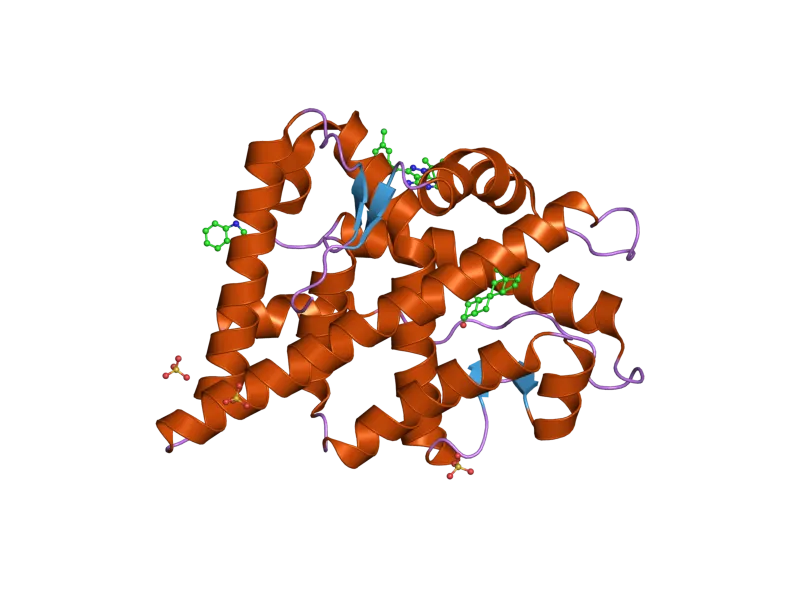
Photo: Jawahar Swaminathan and MSD staff at the European Bioinformatics Institute, Public domain, via Wikimedia Commons
Introduction: Why the Ratio Matters
In steroid pharmacology, the terms "anabolic" and "androgenic" are often treated as synonymous by non-specialists, yet they describe fundamentally distinct biological processes mediated by overlapping but distinguishable molecular mechanisms. The anabolic-androgenic ratio (AAR) — sometimes written as the anabolic-to-androgenic index — is a pharmacological metric developed to quantify the degree to which a given steroid compound preferentially stimulates anabolic (tissue-building) effects relative to androgenic (masculinizing) effects. Understanding this ratio requires moving beyond surface-level definitions and engaging directly with receptor biology, structural chemistry, and the pharmacological concept of tissue selectivity.
This article is intended for students of biochemistry, pharmacology researchers, and scientifically literate readers who wish to develop a mechanistic understanding of how steroid selectivity is determined at the molecular level.
The Androgen Receptor: A Single Receptor, Multiple Outcomes
The androgen receptor (AR) is a ligand-activated transcription factor belonging to the nuclear receptor superfamily — the same family that includes the glucocorticoid receptor (GR), estrogen receptor (ER), and progesterone receptor (PR). The AR gene encodes a protein of approximately 919 amino acids organized into three functional domains: the N-terminal transactivation domain (NTD), the central DNA-binding domain (DBD), and the C-terminal ligand-binding domain (LBD).
Both testosterone — the principal endogenous androgen — and its more potent derivative dihydrotestosterone (DHT) bind the AR's LBD, triggering a conformational shift that releases the receptor from its cytoplasmic chaperone complex, enables nuclear translocation, and facilitates binding to androgen response elements (AREs) in target gene promoters. The resulting gene expression changes are tissue-specific: in skeletal muscle, AR activation upregulates genes involved in protein synthesis and satellite cell proliferation (anabolic effects); in the prostate, seminal vesicles, and skin, AR activation drives differentiation and growth processes traditionally categorized as androgenic.
Critically, it is not the receptor itself that differs between these tissues — it is the co-regulatory protein environment. Tissue-specific transcriptional coactivators and corepressors interact with the activated AR complex to modulate which genes are ultimately expressed. This is the molecular basis for why different AR ligands can produce divergent tissue-level responses even when binding to the same receptor protein.
Structural Determinants of Selectivity
The chemical modifications introduced into synthetic anabolic-androgenic steroids (AAS) relative to testosterone are not arbitrary. Each structural alteration is designed — whether empirically or rationally — to shift the compound's pharmacokinetic and pharmacodynamic profile in specific ways.
17α-Alkylation: The addition of a methyl or ethyl group at the 17α carbon position (as seen in compounds like stanozolol and oxandrolone) confers oral bioavailability by resisting first-pass hepatic metabolism. However, this modification also influences the geometry of the ligand-binding pocket interaction, which can alter receptor conformation and downstream coactivator recruitment patterns.
A-Ring Modifications: Alterations to the A-ring of the steroid nucleus — including the introduction of a 2-hydroxymethylene group (as in oxymetholone) or a 3-keto, Δ4 configuration — affect the compound's affinity for 5α-reductase, the enzyme that converts testosterone to the more potently androgenic DHT. Steroids resistant to 5α-reduction tend to exhibit relatively higher anabolic-to-androgenic ratios in classical bioassay systems because they do not undergo androgenic amplification in DHT-sensitive tissues such as the prostate and skin.
Esterification at C-17β: Many injectable AAS are esterified at the 17β-hydroxyl position (e.g., testosterone enanthate, nandrolone decanoate). Esterification itself does not alter receptor-binding affinity directly — the ester must be cleaved in vivo to release the active hormone — but it dramatically modifies the compound's lipophilicity and, consequently, its release kinetics from intramuscular depot formulations.
Heterocyclic Ring Fusions: Stanozolol incorporates a pyrazole ring fused to the A-ring, a structural feature that eliminates the compound's susceptibility to aromatization (conversion to estrogen via CYP19A1) and substantially reduces 5α-reductase activity. The resulting pharmacological profile is characterized by relatively pronounced anabolic activity with diminished estrogenic and androgenic side effect burden — a profile reflected in its historically high anabolic-to-androgenic ratio as measured by the classical Hershberger assay.
The Hershberger Assay and Its Limitations
The numerical anabolic-androgenic ratios cited in pharmacological references are primarily derived from the Hershberger assay, a rodent bioassay developed in the 1950s. In this assay, castrated male rats are administered the test compound, and the weight changes of the levator ani muscle (used as a proxy for anabolic activity) and the ventral prostate plus seminal vesicles (used as proxies for androgenic activity) are measured relative to a testosterone propionate standard (assigned a ratio of 1:1).
While the Hershberger assay has been invaluable for comparative pharmacology, its translational limitations are significant. Rodent androgen receptor biology does not perfectly mirror human AR function; the levator ani muscle expresses AR at higher levels than most human skeletal muscles; and the assay cannot capture the complexity of human tissue-specific coregulator expression. Consequently, the numerical ratios (e.g., nandrolone reported at approximately 3:1 anabolic:androgenic in some references) should be interpreted as relative indices rather than precise predictive values for human clinical outcomes.
Glucocorticoid Receptor Cross-Reactivity: The Overlooked Dimension
A dimension of steroid selectivity that receives insufficient attention in introductory discussions is the degree to which AAS interact with receptors other than the AR — particularly the glucocorticoid receptor. Several AAS have measurable GR-binding affinity. Compounds with significant GR antagonism, such as mifepristone (primarily known as a progesterone antagonist but with substantial GR affinity) and, to a lesser extent, certain 19-nor derivatives, may partially block the catabolic effects of endogenous cortisol in muscle tissue. This anti-glucocorticoid activity can contribute to net anabolic outcomes through a mechanism entirely independent of AR-mediated gene transcription.
Conversely, steroids with partial GR agonism may produce immunosuppressive or metabolic effects that complicate their pharmacological profile. Understanding the full receptor selectivity map of any steroid compound — encompassing AR, GR, PR, ER, and mineralocorticoid receptor (MR) affinities — is essential for predicting its comprehensive physiological impact.
Selective Androgen Receptor Modulators: The Next Frontier
The recognition that tissue-specific anabolic effects can be pharmacologically dissociated from androgenic effects has driven the development of selective androgen receptor modulators (SARMs). These non-steroidal or modified steroidal compounds are designed to act as AR agonists in muscle and bone while functioning as partial agonists or antagonists in androgenic tissues. The mechanistic basis for this selectivity lies in compound-specific induction of distinct AR conformational states, which in turn recruit different sets of coactivator proteins in a tissue-dependent manner.
Although no SARM has yet received FDA approval for clinical use, ongoing research into compounds such as enobosarm (ostarine) and LGD-4033 (ligandrol) continues to refine our understanding of AR pharmacology and the structural features that govern receptor selectivity. For the research community, SARMs represent both a promising therapeutic avenue and a powerful molecular tool for dissecting the AR's biology.
Conclusion
The anabolic-androgenic ratio is best understood not as a fixed property of a molecule, but as an emergent consequence of structural chemistry, receptor conformational dynamics, tissue-specific coregulator environments, and metabolic fate. For students and researchers engaged with steroid science, moving beyond the ratio as a simple number — and toward an appreciation of the molecular mechanisms it encodes — is the essential next step in developing genuine pharmacological literacy.